Growing grass in heavy shade starts with the right grass type. Some varieties can tolerate low light much better than others, so picking the wrong seed from the start will make the whole job harder.
Shade lawns need a different care routine than sunny lawns. They usually do better with lighter feeding, careful watering, and regular aeration and overseeding to keep the turf from thinning out.
Too much water is one of the easiest ways to make a shady lawn worse. Since shaded ground dries more slowly, overwatering can weaken the grass and create even more problems.
Sometimes the smartest move is to stop forcing grass where it does not want to grow. If the area gets too little sun, alternatives like moss, mulch, shade planting, or xeriscaping may look better and require a lot less frustration.
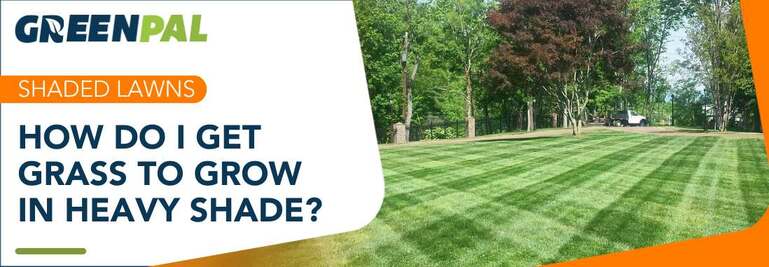
How do I get a lawn growing in heavy shade?
Have a lawn that doesn't get much light?
Don't worry; I have been there as well.
And fortunately, there are a few simple solutions you can use to get your lawn lush and green, even in a shady location.
If that sounds like a plan…
Then let's take a look at these easy to follow methods to grow grass in a low light lawn below!
Grass Selection For Shady Area
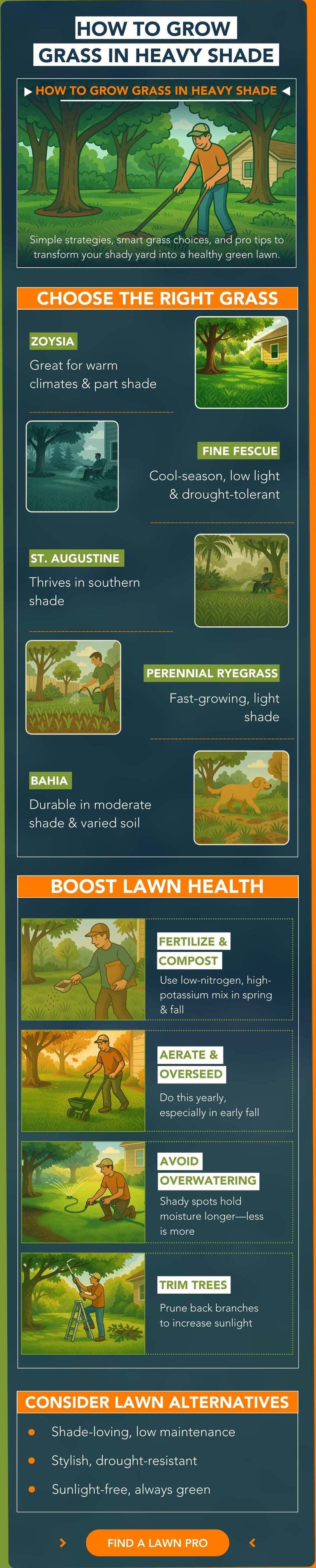
One of the first steps to getting a green lawn in a shady location is selecting the correct grass type.
So what are the best types of grass for a shady lawn?
Here are a few of the best low-light grasses:
1. Zoysia: Like St. Augustine, Zoysia is a warm-season grass that grows well in both sun and shade.
2. Fine-leaf fescue: Fine fescue is a cool season grass that is drought tolerant and will even grow in poor quality soils.
3.St. Augustine:St. Augustine is a southeastern favorite and grows tremendously well in warm areas.
4. Perennial ryegrass: Ryegrass is a cheap option that grows in partly shaded areas.
5. Bahia: Grows well in moderate shade and handles many different soil types.
What is the Best Shade Grass for Warm Climates?
According to Pennington, zoysia is the best warm season grass for shady spaces.
Top Cool Season Grasses for Shady Areas
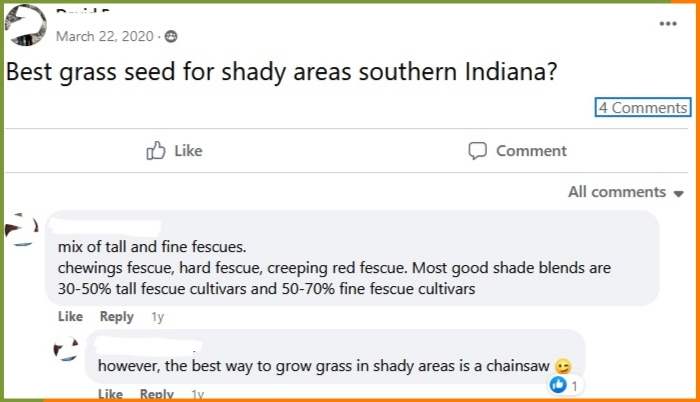
For cooler climates, it is likely going to be a mix of fescues. Some landscapers report simply buying several grass seed types available locally and mixing them for best results.
Methods to Improve the Quality of a Low-light Lawn
While selecting the best type of grass for a low-light area will get your foot in the door...
If you really want your lawn to shine in a shady area, you need to take a few extra steps.
Compost and Fertilize
Look,fertilizing is always important if you really want a healthy and lush lawn. But when it comes to making a shady lawn greener, it's even more important.
In general, you should top dress your lawn with compost annually. Preferably in the spring, so your lawn care gets the nutrients it will need throughout the growing season.
Additionally, you should fertilize your lawn in the spring and winter.
What type of fertilizer is best for grass in shaded areas?
Fertilizers low in nitrogen and high in potassium are best for shaded grass. This combination helps the grass tolerate lower light conditions and strengthens its resistance against diseases.
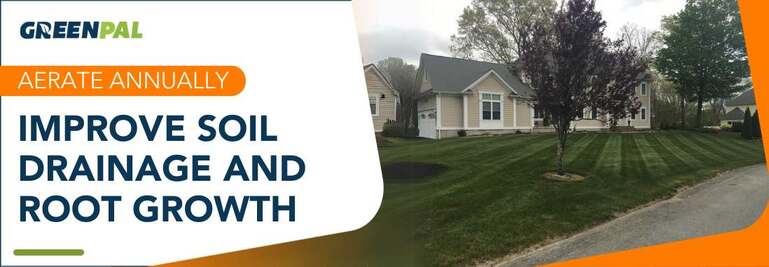
Aerate and Overseed Annually
Here's the deal, like most of these tips, you should try to aerate and overseed a lawn whether or not it is in a shady area.
But when it comes to growing a healthy lawn in a place that gets very little light, annual aeration and overseeding becomes more important.
Additionally, the overseeding will fill out any of the thinner patches of grass in the lawn, which shaded lawns are prone to.
When is the best time to overseed a shaded lawn?
Early fall is ideal, as it allows grass seeds to establish before the onset of winter.
Don't Overwater
When it comes to watering a shady lawn, you won't need to water as frequently or as long as water is less likely to evaporate.
Therefore, you are more likely to find yourself overwatering your lawn if you have a shady yard. Overwatering your property could cause diseases or mold to kill your grass.
But at least you can relax knowing that you can conserve some water and save some money on your water bill.
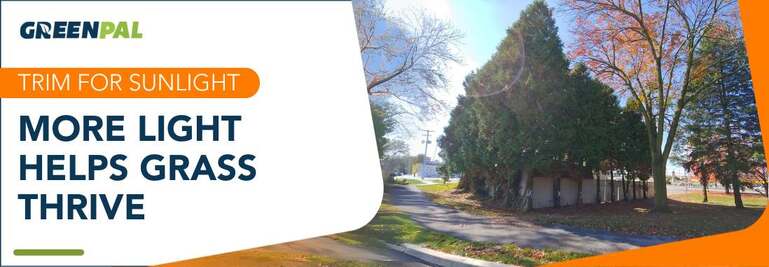
The reality is, growing a perfect lawn in a shady spot can be challenging. So if you can trim your trees back to allow more sunlight in, you may have an easier time maintaining your lawn.
Of course, there is always the option of removing trees entirely, but this option should be carefully considered, as trees can add a lot of value and privacy to your home.
Consider Alternatives
At the end of the day, you may want to consider alternatives to a grassy lawn. After all, maintaining a property in a shady space can be a bit of a hassle.
Hi, I'm Gene Caballero and I'm the co-founder of GreenPal. At GreenPal, we're helping hundreds of thousands of Americans solve one of the trickiest problems: a reliable, fast, and affordable way to get lawncare taken care of. On behalf of GreenPal, I've been featured in the Indianapolis Star, the Sacramento Bee, Entrepreneur, Inc.com, and dozens more. Please feel free to say hi on or connect with me on LinkedIn.
Follow me on:
About The Author
Gene Caballero
Hi, I'm Gene Caballero and I'm the co-founder of GreenPal. At GreenPal, we're helping hundreds of thousands of Americans solve one of the trickiest problems: a reliable, fast, and affordable way to get lawncare taken care of. On behalf of GreenPal, I've been featured in the Indianapolis Star, the Sacramento Bee, Entrepreneur, Inc.com, and dozens more. Please feel free to say hi on or connect with me on LinkedIn.